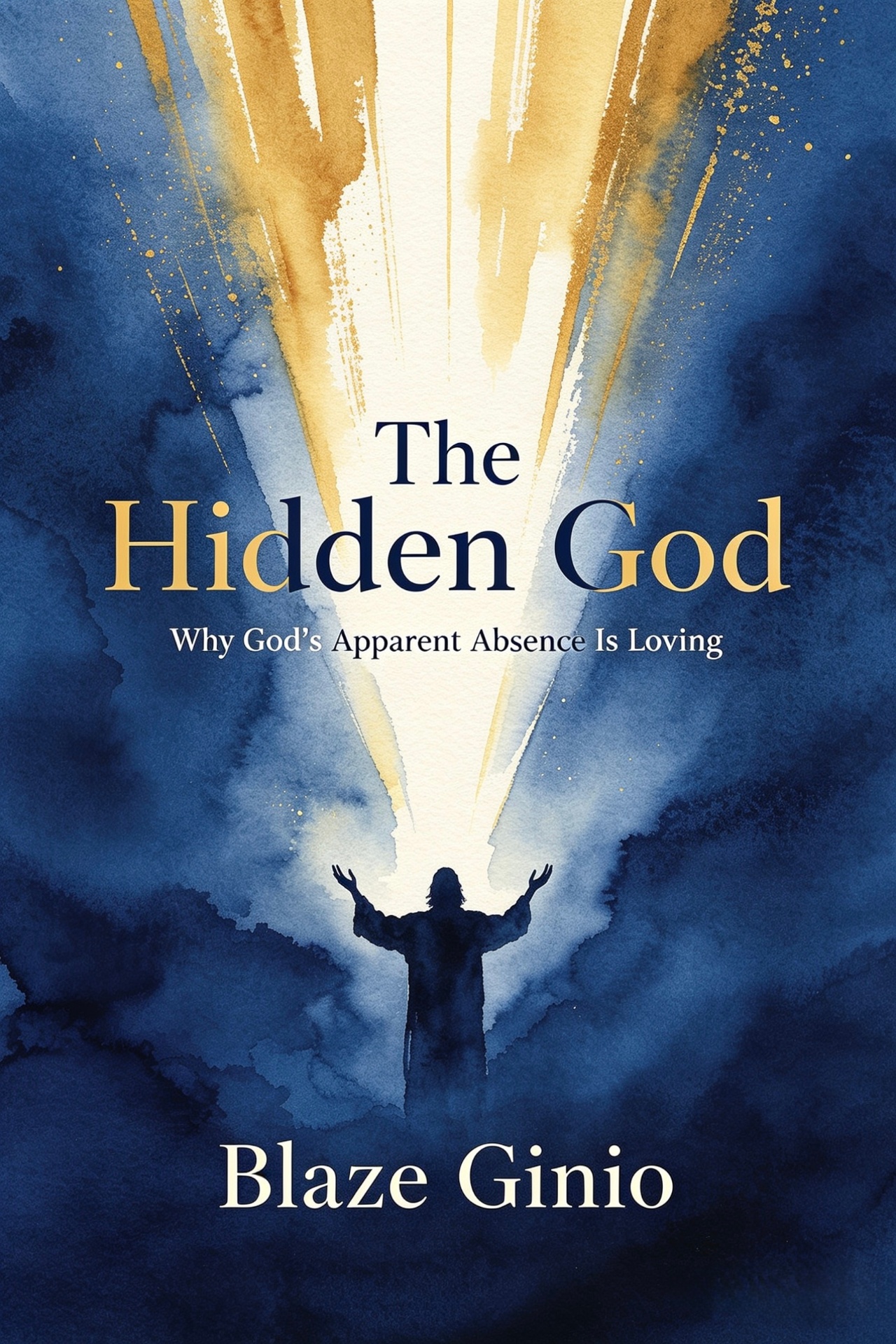
The Hidden God
Why God's Apparent Absence Is Loving
Finding the love of God in the seasons of silence.
The Hidden God is an exploration of one of the most common objections to Christianity: "If God is real, He should show Himself clearly." Many people assume that if God truly exists and is good, His presence would be undeniable, constant, and universally convincing. This book takes that question seriously—but turns it on its head, asking whether a world where God is overwhelmingly obvious would actually be a world shaped by love.
The book begins by examining the desire for visible certainty. It explores the assumption that faith would no longer be necessary if God simply revealed Himself in unmistakable ways. Yet it also raises a deeper question: if God were constantly and inescapably obvious, what would become of human freedom, trust, relationship, and moral responsibility?
From there, the book argues that divine hiddenness may actually be part of how love operates in a world of free moral agents. Love, by its nature, does not coerce belief or overwhelm the will. The book suggests that a God who forced recognition through overwhelming display might produce compliance, but not genuine relationship. Instead, God's partial concealment creates space for voluntary trust rather than compelled acknowledgment.
A central section engages directly with the tension between evidence and encounter. The book explores why God provides enough light for sincere seekers, but not so much that belief becomes automatic or forced. It considers how too much visibility could reduce human beings to spectators rather than participants in a relational journey with their Creator.
The book also addresses the emotional weight of divine silence. It does not dismiss the frustration behind the question "Why doesn't God just show Himself?" Instead, it engages it honestly, acknowledging that hiddenness can feel like absence, distance, or even indifference. The argument is not that the experience is easy—but that it may be meaningful.
Through philosophical reasoning and biblical reflection, The Hidden God presents the idea that God's hiddenness protects something essential: the possibility of love that is chosen rather than imposed, faith that is exercised rather than eliminated, and a relationship that grows through trust rather than compulsion.
Finally, the book reframes the original objection. It suggests that the question is not only "Why doesn't God show Himself?" but also "What kind of relationship would exist if He did?" It proposes that God's restraint is not a weakness in His existence, but a feature of His character—one that preserves the conditions for authentic love between Creator and creation.
The Hidden God ultimately argues that divine hiddenness is not the absence of love, but one of the ways love makes itself possible.
Copyright © Blaze Ginio 2026