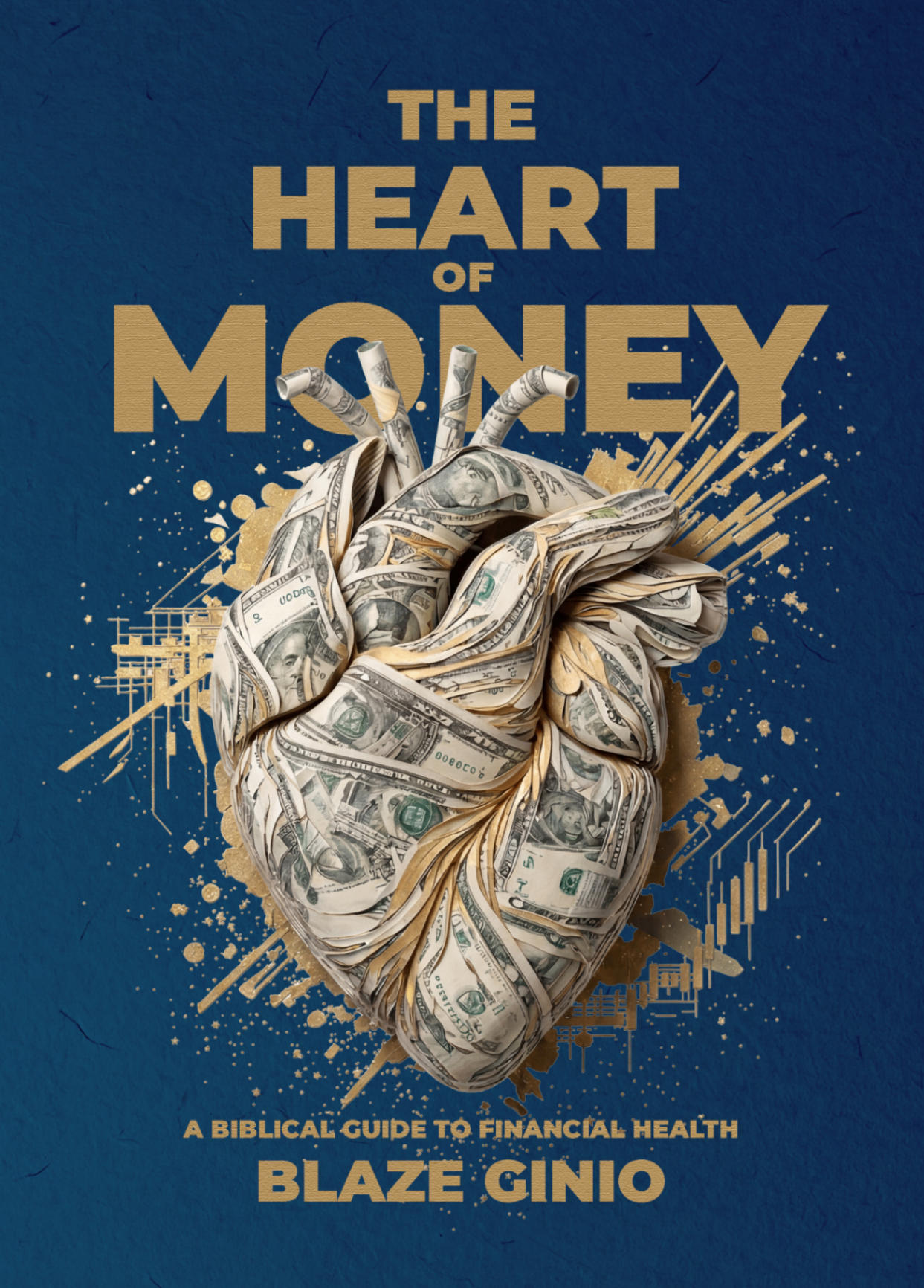
The Heart of Money
A Biblical Guide to Financial Health
Reordering the heart to reorder our finances.
What if money isn't your problem—but your heart is?
In The Heart of Money, Blaze Ginio challenges everything you think you know about wealth. This is not another "how to get rich" guide. Instead, it asks a deeper question: Why does money hold such power over us?
Blending financial insight with spiritual conviction, this book exposes how money shapes our desires, distorts our vision, and quietly becomes our master. Through honest reflection and biblical wisdom, Ginio invites you to examine what your spending, saving, and striving reveal about your soul.
This book doesn't promise financial freedom—it calls you to something greater: financial health rooted in truth, contentment, and purpose.
If you've ever felt that money gives you more anxiety than peace, this book will help you uncover why—and show you a better way forward.
Copyright © Blaze Ginio 2026
Available for Purchase From
Choose your preferred retailer to order the paperback, eBook, or audiobook.
Available From Distributors
Stocked and distributed worldwide through our trusted partners.
Worldwide Distributor

New Zealand Distributors


Reader Reviews
Remarkable, nuanced, and refreshing
Overall, I think it's very good - there's a lot of good, even remarkable, material in there. I really appreciate the nuance you've brought to the subject, the compassion and understanding, while also conveying the 'big calls' that the gospel makes - the counter-cultural stuff. Refreshing.
— Andrew Killick (Castle Publishing)
Deeply relatable and thought-provoking
This book really hit home for me. The way it explores the struggle with money, purpose, and identity feels incredibly real and honest. I appreciated how it blends scripture with practical, everyday experiences—making it both spiritually grounding and easy to apply to real life. It's a personal, reflective read that challenges your thinking in a meaningful way. Highly recommended for anyone looking for both truth and relatability.
— Julian John Tafireyi
Thought-provoking and intellectually engaging
What makes this book exceptional is its depth of thought. It explores the idea that money doesn't just distract from faith—it can become a competing object of worship, offering the same promises of security and control people seek in God. This insight is both powerful and eye-opening, making the book incredibly engaging for readers willing to reflect on their own perspectives.
— Owen Mabumbo
Balanced, reflective, and impactful
The concept behind this book is both unique and powerful. The balance between warnings and encouragements creates a strong framework that speaks to real-life experiences. The message is insightful, and the conclusion is especially well done—bringing the entire journey together in a meaningful way.
— Juliet Muzanenhamo
Positive, Christ Centred and In season
This book has truly changed my life in a positive way, and I read it at the perfect time. It is a fantastic read, and I would highly recommend it to anyone—especially those who hope to build financial wealth. Why? Because it gave me a better perspective on how to handle money in a Godly manner. One of my major highlights is how Christ-centred it is; I gained practical, physical wisdom while my spiritual side was truly fed.
— Mitchel Muzambi
A Bold Prolific Text
This is a good book. A bold text for a first! Your flow of thought is prolific and generous.
— James Ginio
Deeply insightful and rooted in the heart of the issue
This book does an excellent job of identifying that the struggle with money is ultimately a heart issue. It goes beyond surface-level behavior and challenges the reader to think about true inner transformation. The message is both thoughtful and spiritually grounded, making it a meaningful read for anyone seeking lasting change.
— Andrew Mchena